On the Preservation of Suede
Horizon
May, 2026
Suede does not resist time.
It receives it.
Where other leathers maintain distance from wear,
suede absorbs it—
mark by mark, contact by contact.
Its surface is not sealed.
It remains open.
Responsive.
This is its distinction.
It is also its risk.
Material Condition
Suede is defined by exposure.
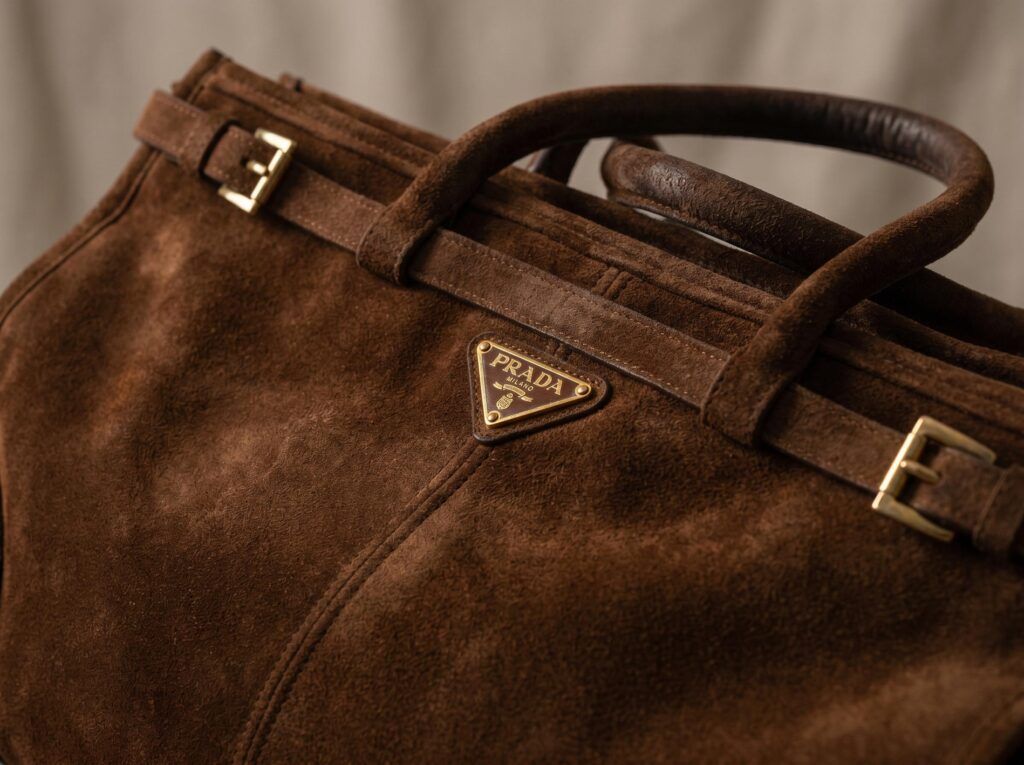
The nap—soft, raised, irregular—responds immediately to touch.
Pressure alters it.
Moisture disturbs it.
Friction records itself across the surface.
No intervention fully reverses this.
What can be done is not restoration.
It is management.
Contact
Use determines outcome.
Repeated contact compresses the nap.
Edges darken.
High-touch areas develop contrast.
These changes are not defects.
They are accumulations.
The question is not how to avoid them.
It is how to control their distribution.
Rotation becomes necessary.
Continuous use accelerates uneven wear.
Intervals restore balance.
Moisture
Water does not sit on suede.
It enters.
Even minimal exposure alters texture.
Drying restores form, but not always uniformity.
Intervention must remain measured.
Excess handling introduces more disturbance than it resolves.
Absorption, not agitation, defines proper response.
Storage
Suede cannot be compressed without consequence.
Shape must be supported.
Interior structure preserved.
Air must circulate.
Containment should remain breathable.
Light, over time, shifts tone.
Prolonged exposure introduces variation.
Storage is not passive.
It determines the pace of change.
Surface Management
Brushing does not repair.
It redistributes.
Direction matters.
Force does not.
The objective is not to restore an original state.
It is to maintain coherence across the surface.
Intervention should remain infrequent.
Over-handling accelerates breakdown.
Protection
Preventive measures operate at the margin.
They reduce exposure.
They do not eliminate it.
Suede remains vulnerable by design.
Its value is tied to this condition.
A sealed surface would negate its character.
Time
Suede does not age uniformly.
Variation emerges—
across panels, along edges, within areas of repeated use.
This divergence defines the object over time.
Some surfaces darken.
Others soften.
Some retain structure.
Others yield.
No two outcomes align.
What Endures
Preservation, in this context, is not the suspension of change.
It is the regulation of it.
To preserve suede is to accept its response—
and to limit its excess.
Closing
The objective is not to keep suede unchanged.
It is to ensure that, as it changes,
it remains coherent.